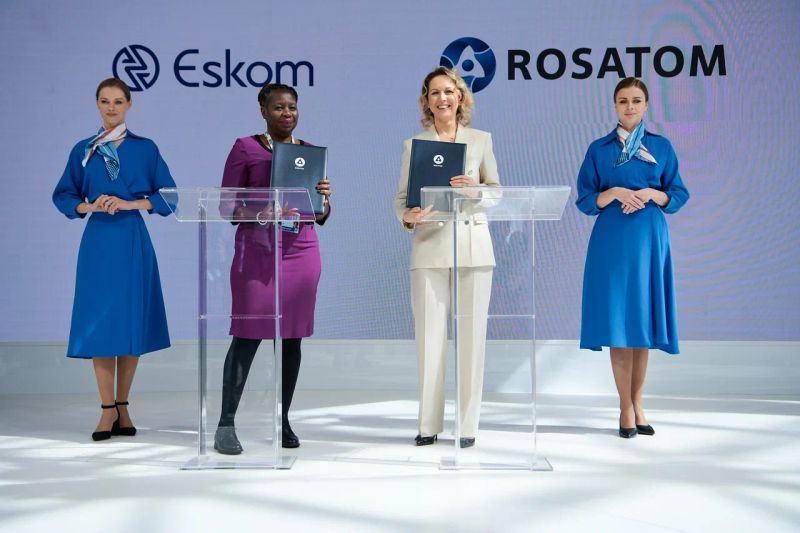
Russian state-owned nuclear corporation Rosatom, which signed a landmark cooperation agreement with South Africa’s Eskom to enhance personnel training and employ African graduates, has now found itself caught in the crosshairs of new US sanctions targeting Russia’s energy sector. These sanctions, imposed in response to Russia’s ongoing military operations in Ukraine, aim to limit Moscow’s war capabilities by choking its access to critical revenue streams.
The sanctions specifically target senior Rosatom officials, including CEO Alexei Likhachev, who is accused of contributing to Russia’s defense capabilities through the development of military systems and equipment. While Rosatom remains steadfast in condemning the sanctions, calling them “unlawful” and a form of “unfair competition,” questions loom over how this may affect its strategic partnership with Eskom, especially in light of their recent agreement.
In early 2024, Rosatom and Eskom formalized a roadmap aimed at creating joint educational programs, providing business training, and increasing employment opportunities for African graduates from Russian universities. This ambitious collaboration was unveiled at COP28 in Dubai, with both entities committing to a variety of initiatives, including co-programming the Obninsk Tech School for Women in STEM. The initiative, set to take place in Obninsk in June 2024, is a key part of their shared vision for gender empowerment and youth development within the energy sector.
The agreement also highlights the training of engineering skills through programs like AtomSkills and aims to integrate Eskom’s Women Advancement Programme with Rosatom’s leadership training initiatives, such as the “[In]Visible Power” Women Leadership Programme. This partnership was seen as a progressive step for both companies, particularly in fostering talent and innovation within the nuclear energy industry, with a specific focus on African graduates.
Despite these positive developments, the US sanctions have cast a shadow over the collaboration. Eskom has yet to provide clarity on whether the sanctions will affect its relationship with Rosatom or disrupt the planned initiatives, leaving stakeholders in the dark.
In its response, Rosatom decried the US measures, stating that the sanctions were part of a broader effort by “unfriendly countries” to weaken its global standing as a leader in nuclear energy technology. The Russian embassy in Pretoria also weighed in, echoing the sentiments of Russia’s Foreign Minister Sergey Lavrov, who denounced the sanctions as a refusal by the US to engage in “fair economic competition.”
As the situation unfolds, all eyes are now on Eskom and Rosatom to see whether the sanctions will halt or alter the trajectory of this significant partnership. With both entities invested in strengthening their collaboration, particularly in areas like STEM education and skills development, the potential fallout from these sanctions could have wider implications for energy cooperation between Russia and South Africa.
