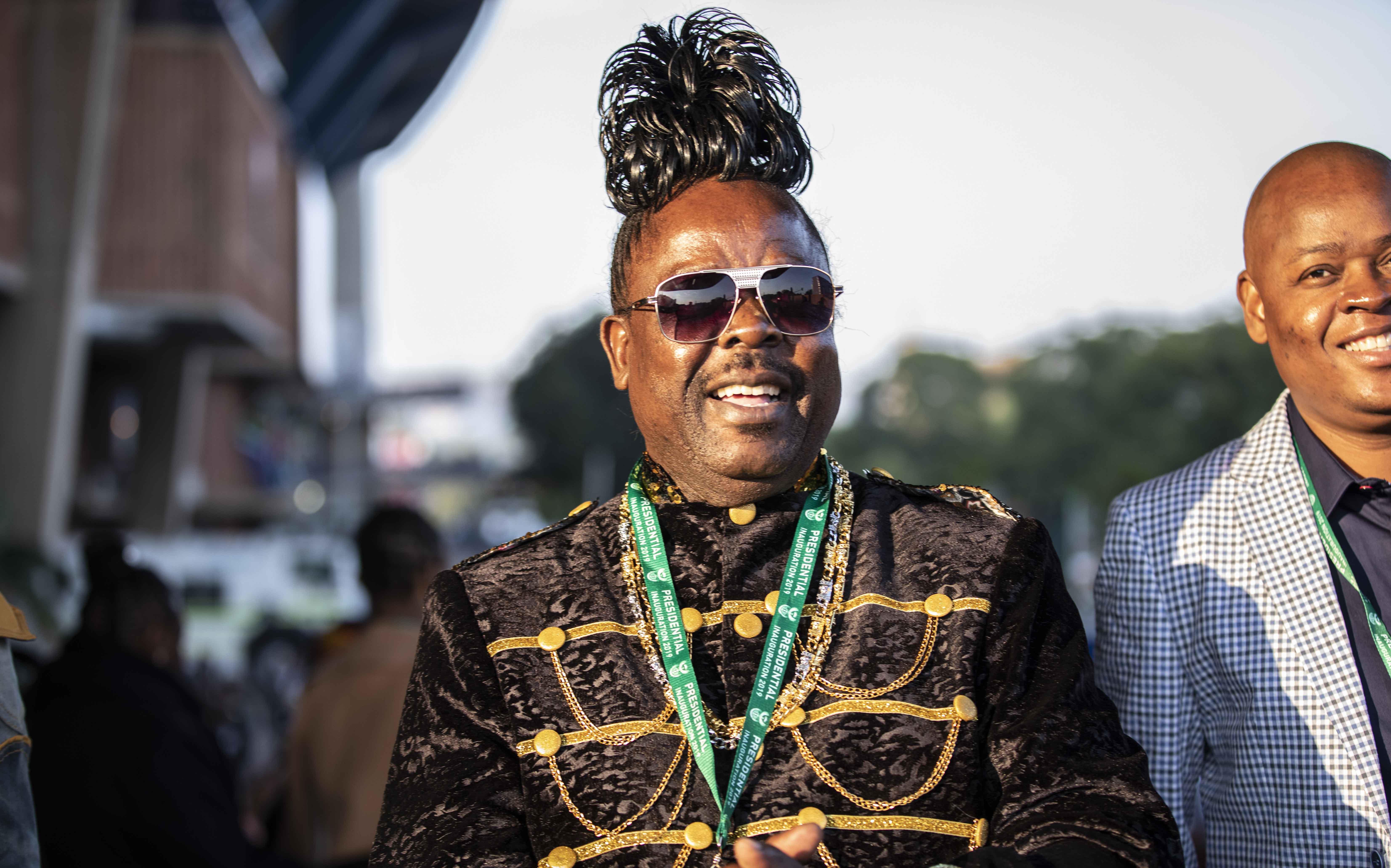
As the uMkhonto weSizwe (MK) party marked its one-year anniversary this week, the celebrations resonated with a blend of political defiance and a celebration of what the party views as a major triumph. MK Member of Parliament and prominent musician, Gezani Eric Kobane, better known as Papa Penny, addressed the gathering with fervor, asserting that he harbors no regrets over his decision to leave the African National Congress (ANC). The occasion was a testament to the party’s momentum, with Papa Penny drawing parallels between the struggle for liberation and the MK party’s fight to challenge the establishment, likening it to David defeating Goliath. The celebrations, which spanned from Moses Mabhida Stadium to an extravagant gala dinner at the Olive Convention Centre, marked a pivotal moment for the party that aims to reshape South Africa’s political and cultural landscape.
Papa Penny’s words struck a chord with those who attended the Moses Mabhida Stadium event, where the stadium was packed despite alleged efforts to sabotage the gathering. His speech underscored his satisfaction with the MK’s rise as a formidable force, a development he believes was made possible by the leadership of former president Jacob Zuma, who founded the party. For Papa Penny, the MK party’s focus on advocating for South Africa’s artists—especially in contrast to what he sees as the ANC government’s disregard for the cultural sector—is a key selling point. He pointed to the Cultural and Creative Industries Federation of South Africa (CCIFSA), a structure Zuma put in place, which he claims has since been dismantled by the current administration.
The former ANC member turned MK advocate reflected on the legacy of Zuma’s cultural initiatives, lamenting their destruction after his exit from the party. Papa Penny’s critique of the ANC echoes a broader disillusionment among those who feel that the current government has failed to address the needs of ordinary South Africans, particularly in the creative industries. He expressed frustration over the erosion of the policies that he believes would have benefited artists, stressing that the dismantling of CCIFSA and the neglect of artistic communities are reflective of a deeper systemic issue. “They are killing the society, community, citizens of South Africa,” Papa Penny declared, drawing a direct connection between political decisions and the economic struggles facing the nation’s artists.
In his address, Papa Penny reinforced his commitment to the MK party’s values, particularly its promise to advocate for a more inclusive cultural environment. He positioned himself as the voice of South African musicians and creatives, stating unequivocally that the MK party would serve as a political platform that puts their interests front and center. This message resonated with many at the anniversary event, especially in a country where the entertainment industry has long been plagued by a lack of support, infrastructure, and opportunities for emerging talent. With the MK party at the helm, Papa Penny promised a shift in focus, from the current government’s perceived neglect to one that empowers and sustains artists across the country.
The party’s first anniversary was marked not only by political speeches but also by an opulent gala dinner at the Olive Convention Centre in Durban, where the air of exclusivity was palpable. Access to the event came with a hefty price tag, with tickets ranging from R25,000 for seats at the back to a staggering R2 million for the coveted “platinum spear” tables next to Zuma. The event’s pricing strategy made it clear that the MK party is positioning itself as a political movement with deep pockets and aspirations to rival the lavish fundraising efforts of South Africa’s traditional political elites. For many, the extravagant nature of the event may be seen as a statement of intent—a declaration that the MK party is not just a populist movement but one that is ready to engage in high-stakes political games.
However, the opulence of the gala and the high price of entry raised eyebrows, sparking debate about the role of wealth in politics and whether such displays align with the party’s purported aims to address societal issues. Critics might argue that the MK party’s lavish celebrations and expensive ticket prices are at odds with its professed dedication to ordinary South Africans, particularly those from disadvantaged communities. Nonetheless, the event underscored the MK party’s resolve to build a distinct political identity, separate from the ANC and the traditional political elite, while leveraging financial resources to secure its place in the South African political discourse. As the MK party continues to grow, it remains to be seen whether its promises of artistic empowerment and cultural preservation will translate into tangible change for the country’s creative industries.
