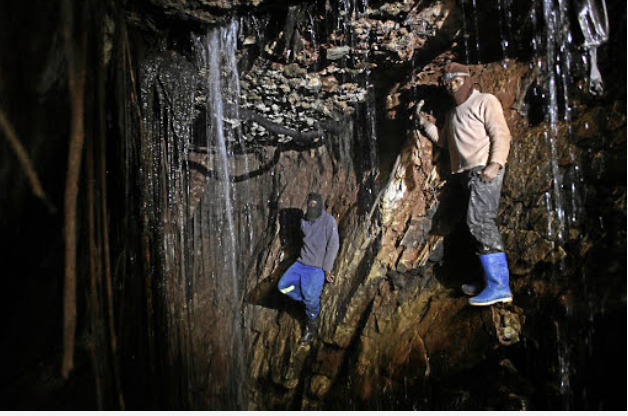
The controversy surrounding illegal mining in South Africa has reached a boiling point after Minister in the Presidency, Khumbudzo Ntshavheni, declared that the government would not be rescuing illegal miners trapped underground at disused mines in Stilfontein, North West. Instead, she stated that the authorities would “smoke them out,” refusing to provide aid to what she referred to as “criminals.”
This bold stance has sparked intense debate across the country, with some supporting the government’s decision to take a hard line on illegal mining, while others, including political figures and labour unions, have expressed concern over the lack of empathy and the human toll of such a policy.
The Minister’s Comments: “We Are Not Helping Criminals”
At a post-Cabinet briefing on Wednesday, Ntshavheni’s comments were clear: the illegal miners, who are believed to number in the thousands, are engaging in criminal activity and should not be assisted. She emphasised that these miners had entered the mines without permission and had done so for profit, not for the good of the country. She firmly stated that the government would not “send help to criminals,” adding that the miners would eventually “come out” on their own and would be arrested once they did.
“We didn’t send them there, and they didn’t go down there for the good benefit or for the good intentions for the Republic. So, we can’t help them,” Ntshavheni remarked. “Those who want to help them, they must go and take the food down there. They will come out, we will arrest them.”
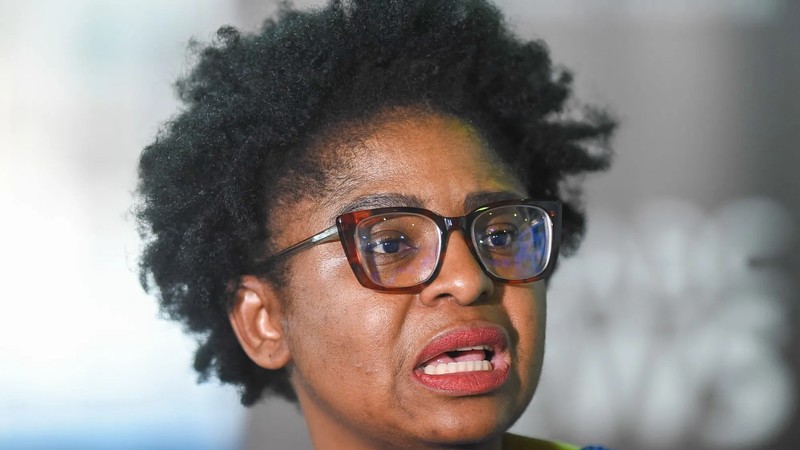
Her comments quickly ignited a wave of responses, with many accusing her of lacking compassion for the families of the miners and the human cost of the situation.
Helen Zille, Federal Chair of the Democratic Alliance (DA), was one of the most vocal critics of Ntshavheni’s approach. On social media, Zille called for empathy, arguing that the situation should be seen through a human lens. “Come on. The minister is talking about human beings here,” Zille posted, adding that the trapped miners were facing life-threatening conditions and needed to be rescued.
“People facing a perilous, life-threatening calamity must be rescued,” Zille continued. “Arrest and prosecute them for breaking the law. But don’t leave them to perish in horrific circumstances. What happened to Ubuntu?”
Zille’s remarks highlight a growing sentiment among some South Africans who believe that the government’s response should be more compassionate, particularly considering the human toll involved. Many families in North West are desperate to retrieve their loved ones who have reportedly been trapped for months in the mines. The miners, according to community members, are scared to emerge due to fears of arrest, especially in light of ongoing police operations such as “Operation Vala Umgodi.”
The conditions of the trapped miners are reportedly dire. According to community representatives, at least 4,500 illegal miners are believed to be stuck underground, many of them fearing arrest if they resurface. Some miners have reportedly died or fallen gravely ill due to the hazardous conditions inside the mines. The miners are said to be holed up deep within abandoned shafts, unable to escape without facing potential criminal charges.
A community volunteer who ventured underground earlier this week came back with distressing news: several miners had died while others were seriously sick. This grim reality underscores the perilous nature of illegal mining and the human cost of such activities.
The issue of illegal mining has sparked a wider debate about government competence and the failures within the mining sector. Joseph Mathunjwa, president of the Association of Mineworkers and Construction Union (AMCU), has criticised the government’s handling of the mining crisis, arguing that the state’s failure to manage the sector properly has contributed to the rise of illegal mining.
Mathunjwa argued that illegal miners should not be solely blamed, given the widespread poverty and lack of opportunities in the mining communities. He highlighted that formal miners, too, face grave dangers on a daily basis in a sector that has been plagued by mismanagement and poor safety standards.
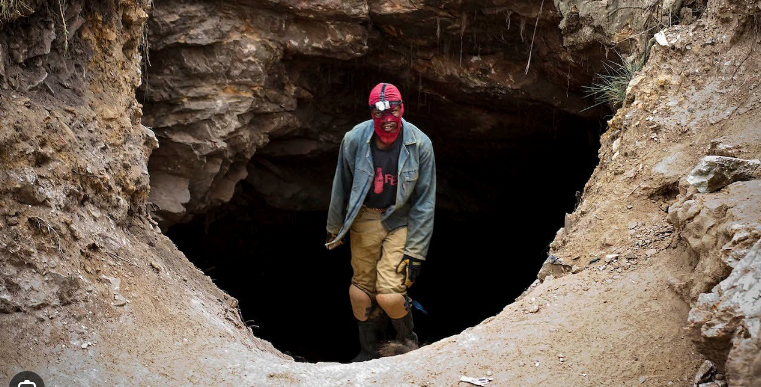
“Workers are being killed every day, even in the regulated mines,” Mathunjwa said. “Therefore, there is no law. You can’t blame people who go and seek a livelihood because of this government that is so incompetent.”
He also pointed to the government’s inability to address the issue of illegal spaza shops and foreign nationals running businesses outside the law, calling the state a “banana republic” and a “failed state.” Mathunjwa drew a parallel between the current treatment of illegal miners and the tragic events of 2012, when 34 striking miners were killed by police during a protest at the Marikana mine.
“Thirty-four mineworkers were killed, fighting for economic emancipation by the very same government,” Mathunjwa recalled. “Today they have the guts to say let’s smoke them out, those criminals. The same government has made this environment very fertile for illegal mining.”
The debate over illegal mining in South Africa is complex, involving issues of unemployment, poverty, and state failure to provide sustainable livelihoods for mining communities. While the government’s focus on tackling criminality is understandable, many argue that a more comprehensive approach is needed—one that addresses the root causes of illegal mining and provides real alternatives for those involved.
AMCU’s Mathunjwa has suggested that artisanal miners could be trained and integrated into the formal mining sector, which would both curb the dangers of illegal mining and provide more sustainable employment opportunities. He also emphasised that many of the miners involved have lost their jobs due to retrenchments, making it difficult for them to support their families without resorting to illicit means.
For now, the situation remains tense, with government actions and public reactions continuing to divide opinion. While some believe that tough action is needed to combat crime and lawlessness, others, like Helen Zille, argue that the government must show more humanity in handling the crisis. As the issue unfolds, it is clear that a balance must be struck between upholding the rule of law and protecting the lives of those at risk.
