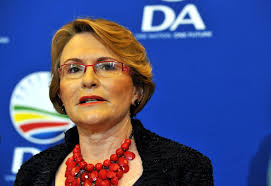
Helen Zille, the Democratic Alliance (DA) federal chairperson, has raised strong objections to clauses 4 and 5 of the Basic Education Laws Amendment (BELA) Act, describing them as unnecessary and part of a broader agenda to undermine Afrikaans. Zille’s comments came amid ongoing debates about the contentious legislation, which was signed into law in September but saw President Cyril Ramaphosa delay the implementation of these two specific clauses to allow for further consultation. The DA’s opposition is rooted in their belief that these provisions would facilitate the gradual erosion of Afrikaans as a medium of instruction in schools and universities, an issue that has stirred significant tension within South Africa’s political landscape.
Zille specifically argued that clauses 4 and 5 were a thinly veiled attempt to phase out Afrikaans, pointing to the way schools with parallel-medium streams—offering both Afrikaans and English—have eventually transitioned to English-only instruction. She compared this trend to the shift at Stellenbosch University, once a stronghold for Afrikaans speakers, which has now largely become an English-language institution despite its original cultural and linguistic base. For Zille, the proposed amendments to the South African Schools Act (SASA) represent a continuation of this pattern, which she perceives as a deliberate effort to marginalize Afrikaans in South Africa’s education system.
The controversial clauses are part of broader amendments to the South African Schools Act, with Clause 4 seeking to revise the school admission age and ensure that learners attend school from a compulsory starting age, while Clause 5 focuses on requiring the governing bodies of schools to submit language policies to the Department of Education for approval. Zille and the DA argue that these changes could open the door for the national government to interfere with the linguistic choices of schools, undermining Afrikaans as a medium of instruction. She emphasized that the government’s increasing control over language policies and school admissions would ultimately harm the multilingual fabric of South Africa’s educational institutions.
Despite the DA’s objections, President Ramaphosa has not yet signed the BELA Act into full law, with Deputy President Paul Mashatile recently revealing that discussions are still ongoing within the unity government. Mashatile’s comments, made during his address at the South African Communist Party’s (SACP) national special congress, suggested that some headway had been made, but significant concerns remain. Gauteng Premier Panyaza Lesufi, a strong proponent of the BELA Act, has called for the law to be enacted as soon as possible, arguing that it would strengthen the education system and improve access for all learners, including those from disadvantaged backgrounds.
In response to the ongoing debate, DA leader John Steenhuisen has signaled that if discussions fail to halt the BELA Act’s progress, the party is prepared to take the matter to court. This legal challenge would be part of a broader effort to block what the DA sees as an infringement on parental rights and linguistic freedom. The protest against the BELA Act has also gained support from other groups, including AfriForum, which has mobilized against the amendments, claiming that they disproportionately affect Afrikaans speakers and other minority communities. The vocal opposition reflects the deep divisions over the future of language policies in South Africa, with many fearing that the government’s actions could dilute the country’s rich cultural diversity.
Meanwhile, the Economic Freedom Fighters (EFF), a key political player in the unity government, has expressed its support for the BELA Act, with Secretary-General Marshall Dlamini vowing to lead mass protests if Ramaphosa delays signing it into law any further. The EFF views the act as a necessary step to standardize education and ensure that schools adhere to national policies. The party’s strong stance on the issue highlights the ideological rift between South Africa’s political parties, as they each weigh in on the balance between language, cultural preservation, and the drive for a more unified educational system.
As the debate over the BELA Act continues, the political landscape remains sharply divided, with both supporters and critics of the legislation preparing for further battles. While the DA and other lobby groups seek legal recourse and mass protests, the government is caught between the need for reform and the pressure to respect linguistic diversity in a multilingual nation. How President Ramaphosa chooses to navigate these complex issues will have long-lasting implications for South Africa’s education system, its cultural identity, and the future of Afrikaans as a language of instruction in the country.
