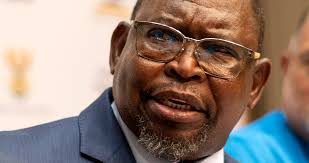
As South Africa gears up for Finance Minister Enoch Godongwana’s highly anticipated Budget Speech on Wednesday, the ANC seems to be standing alone in its push for an increase in the Value-Added Tax (VAT), with several of its Government of National Unity (GNU) partners opposing the proposal.
The minister is expected to address the country’s fiscal challenges, with speculation circulating that he may either raise VAT or cut government spending. However, the VAT hike, initially proposed earlier this year, has drawn fierce resistance from multiple political parties, all urging the government to explore alternative measures.

The VAT Debate
In an attempt to raise R58 billion to address a growing budget shortfall, the government had considered increasing VAT from 15% to 17%. However, the proposal faced swift opposition, particularly from the Democratic Alliance (DA), the Freedom Front Plus (FF Plus), and other GNU partners, leading to the postponement of last month’s Budget Speech.
Reports indicate that Godongwana is now considering a smaller VAT increase of 0.5%, which continues to spark heated debates. DA Finance Spokesman Mark Burke is resolute that no VAT increase should be included in the budget. “South Africans are already overburdened,” Burke said, as the DA pushes for measures like reducing inefficient government spending, boosting the South African Revenue Service’s (SARS) efficiency, and enacting pro-growth reforms.
Opposition Parties Weigh In
The FF Plus, under the leadership of Dr. Corné Mulder, has echoed similar sentiments. Mulder criticized VAT hikes, arguing that the previous increase did not deliver the anticipated economic benefits, and would only serve to deepen the country’s economic woes.
“The truth is that it will further stagnate the economy and exacerbate the economic crisis,” Mulder stated, pointing to the economic strain already felt by South Africans.
Meanwhile, the GOOD Party has raised concerns that the proposed measures are insufficient. Secretary-General Brett Herron argued that the ANC and DA’s positions are both “business-as-usual” and fail to address the root causes of inequality and poverty. Instead, the GOOD Party has suggested alternatives like implementing a wealth tax and reducing the tax-free retirement savings cap.
Pro-Poor Measures Urged
Various parties have emphasized that any budgetary decisions must prioritize the needs of the country’s most vulnerable citizens. PAC Secretary-General Apa Pooe stated that the government must focus on pro-poor policies that prevent the economic burden from falling on marginalized groups.
“South Africans deserve a Budget that is people-centred, ensuring that no one is left behind,” Pooe said, echoing the sentiments of other parties like the Patriotic Alliance and the Congress of South African Trade Unions (Cosatu). Cosatu, an ANC ally, also opposed the VAT increase, fearing it would worsen inflation and erode workers’ already strained wages. Instead, Cosatu has suggested exploring pension contribution holidays through the Government Employees Pension Fund (GEPF).
A Divided Approach
While the ANC appears steadfast in pushing for the VAT increase as part of its fiscal strategy, its partners within the GNU, along with opposition parties, continue to push for a more balanced approach, focusing on reducing wasteful expenditure, improving tax efficiency, and implementing pro-growth reforms.
As the Budget Speech looms, all eyes will be on Minister Godongwana to see whether he can bridge the divide among his own coalition, while balancing the demands of a nation grappling with economic hardship, poverty, and inequality.
