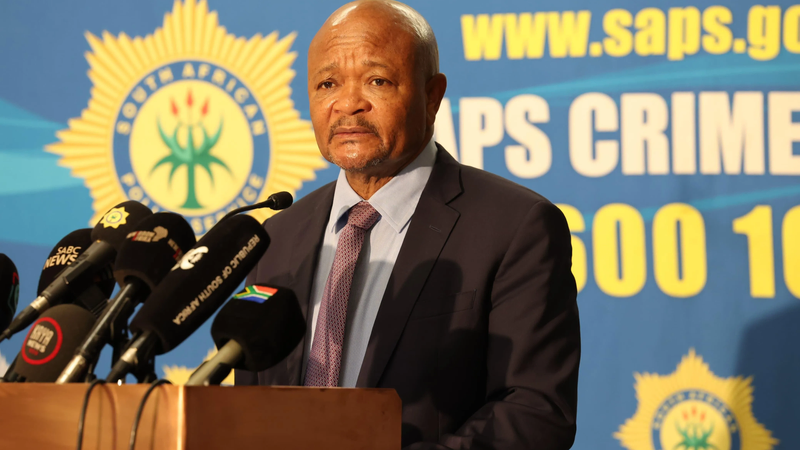
As tensions over South Africa’s crime statistics continue to escalate, Police Minister Senzo Mchunu has directly challenged AfriForum, demanding the controversial Afrikaner rights group provide verifiable evidence to support their claims about farm murders.
According to the Ministry of Police’s crime statistics for the third quarter (October to December 2024), only one farmer was reported as murdered during this period. However, AfriForum has disputed these figures, sparking a standoff between the group and the government.
In a pointed interview with Daily News, Minister Mchunu challenged AfriForum to present concrete proof that contradicts the official crime data. “We thoroughly work to produce accurate crime statistics to reflect the country’s situation,” Mchunu stated. “We will not allow any posturing by an organisation like AfriForum to cause unnecessary uncertainty. We will await them providing us with evidence.”
The dispute centers on AfriForum’s claim that there were five farm murders during the third quarter of 2024, a figure significantly higher than the one reported by the Ministry of Police. Jacque Broodryk, AfriForum’s head of community safety, firmly rejected the government’s numbers and promised to deliver evidence supporting their version of events by Tuesday.
This disagreement has intensified the rhetoric between the two sides, with Mchunu accusing AfriForum of taking an “Orwellian” approach to the issue, accusing the group of distorting the facts for political purposes. He also questioned AfriForum’s recent lobbying trip to the United States, where the group sought support from the Trump administration for the interests of white South Africans. The trip has sparked harsh criticism from multiple political groups, including the People’s Movement for Change, which condemned AfriForum’s actions as “reckless” and harmful to the country.
Marius Fransman, president of the People’s Movement for Change, described AfriForum’s foreign lobbying efforts as an “insult” to the millions of South Africans. He criticized the group’s portrayal of the country as one embroiled in “land grabs” and the “persecution of white citizens,” urging South Africans to take a stand against AfriForum’s actions.
Meanwhile, President Cyril Ramaphosa has also condemned AfriForum and Solidarity’s efforts to appeal to the White House, stating that such actions were exacerbating divisions within the country. “We need to send a clear message that we should solve our problems here as South Africans,” said Ramaphosa. “What they are doing is dividing our nation, not building it.”
As both AfriForum and the Ministry of Police prepare to present their arguments, the stakes have never been higher. This ongoing clash could become a defining moment in South Africa’s discourse on crime, civil rights, and national unity, as political factions rally against AfriForum’s divisive tactics and its international campaign.
