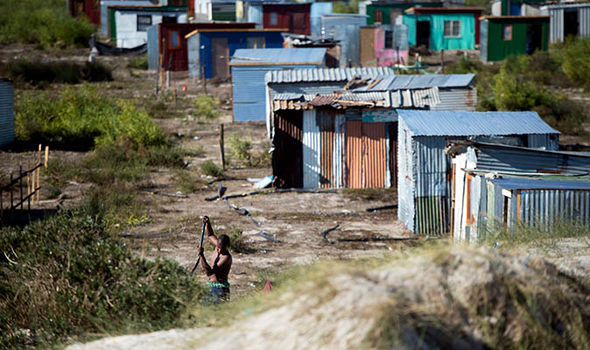
Afrikaners living in the impoverished community of Pietermaritzburg, KwaZulu-Natal, have rejected President Donald Trump’s offer to help them relocate to the United States. Trump’s executive order, signed earlier this month, aimed to provide humanitarian relief and resettlement for Afrikaners in South Africa who are victims of what he described as “unjust racial discrimination.” However, many locals, particularly those living in Oribi village, an area plagued by poverty, drug abuse, and crime, have expressed their reluctance to leave their homeland, citing the challenges of migration and their deep connection to South Africa.

For residents like Rudi Kritzinger, there is no excitement in leaving the country. He, along with others, finds the offer unrealistic, as migrating would require substantial money for visas, flights, and settling down in a foreign country. Kritzinger, who relies on odd jobs and government grants to survive, said South Africa is his home, and he sees no reason to leave.
Many of the residents in Oribi village work as car guards in neighboring upmarket suburbs or depend on social grants for their survival. Some families are struggling with basic needs, such as securing education for their children, as no-fee schools are located far away in black townships and rural areas.
Kim Larsson, a resident of Scottsville Extension, also expressed her love for South Africa and her unwillingness to leave. She said that despite earning a minimum wage, she is happy and doesn’t see how migrating would improve her life. “If you cannot make it work in your country, how are you going to make it work elsewhere?” she said. Her sentiments are shared by others in the community, who dismissed the offer as nothing more than political maneuvering.
One resident, Crystle Boucher, 37, who lives in a community with people of various races, rejected Trump’s offer outright. Boucher, a single mother of three, shared her frustration over her struggles to find employment and provide for her children. She also criticized Trump for freezing USAID, which had previously supported her community with healthcare services and assistance from charity organizations. “He took medication away from people who have HIV/Aids, which is not right,” she said. Boucher remains doubtful about whether migrating to the U.S. would improve her situation, especially given the uncertainty over her safety and future there.
Jani Lang, another resident, agreed that Trump was creating a problem where none existed. “Instead of prioritising Afrikaners, Trump should create opportunities in South Africa for all racial groups,” she said. Lang, who believes in equal opportunities for all South Africans, expressed concern that the offer would remove Afrikaners from their roots and homeland. “Living in Oribi is not what it used to be… people are divided,” she said, referring to the increasing crime rate and the racism that many white people face in the area. Despite her frustrations, Lang admitted that the opportunity to move to America could potentially offer a fresh start, but the emotional cost of leaving her homeland and heritage was too great.
Other residents, like Hugo van Niekerk, leader of a predominantly Afrikaner squatter camp in Gauteng, also acknowledged the appeal of such an opportunity but pointed out the practical barriers. “How are we going to pay to get there?” he asked. Van Niekerk, like many others, is unsure of the immigration process and whether he could afford the costs associated with migrating, including visa fees, flight tickets, and settling expenses.
As the debate continues, it’s clear that while some Afrikaners may see the offer as a lifeline, many others are not swayed by it, preferring to stay in South Africa, despite the challenges they face. The offer has stirred mixed emotions, highlighting the complexities of immigration, identity, and the desire for a better life.
