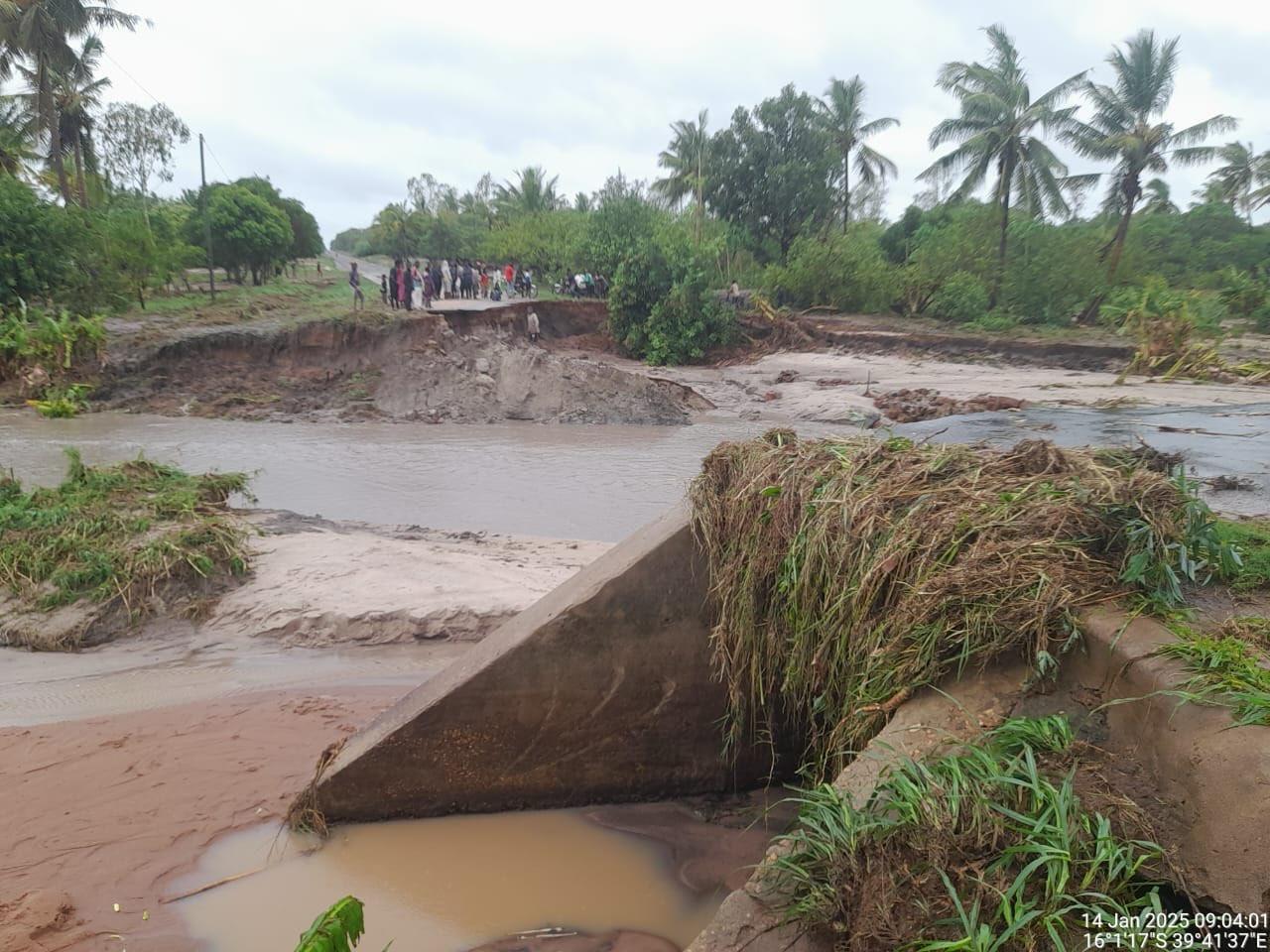
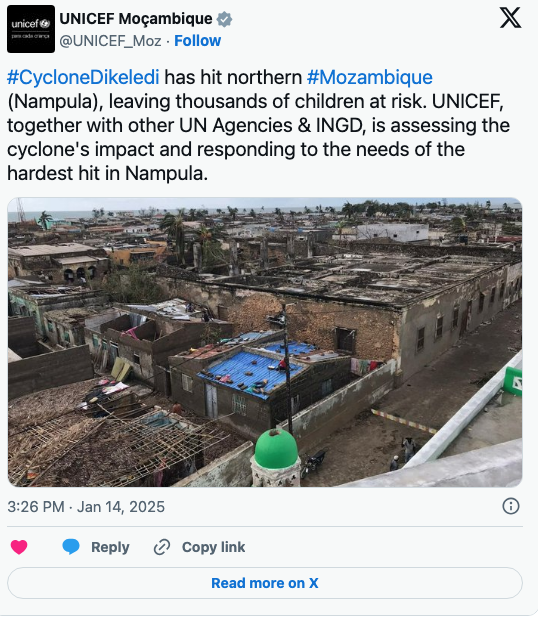
Cyclone Dikeledi has struck Mozambique with devastating force, compounding the damage already caused by Cyclone Chido just weeks earlier. The powerful storm, which made landfall in northern coastal regions of the country, has wreaked havoc in Nampula province, leaving thousands in desperate need of assistance. With many communities still recovering from the impacts of Cyclone Chido, the arrival of another severe storm has left families vulnerable and in urgent need of help.
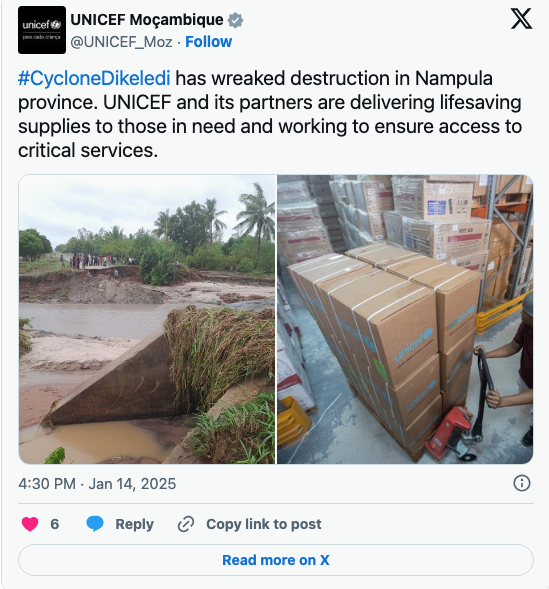
Unicef Mozambique has been quick to respond, coordinating with partners to deliver lifesaving supplies and ensure that critical services remain accessible to those most affected. The humanitarian agency expressed deep concern for the wellbeing of children and families, who are already grappling with the aftermath of the earlier disaster. As heavy rains and winds continued to batter the region, Unicef’s priority is to provide immediate relief and ensure that those impacted can rebuild their lives.
While the cyclone has started to move southward, heavy rainfall persists in the Nampula and Zambezia regions, threatening to cause further damage. According to Météo-France, Dikeledi is expected to intensify into a severe cyclone as it moves south-east, though by Thursday or Friday, the system should weaken and shift direction, no longer posing a direct threat to populated areas.
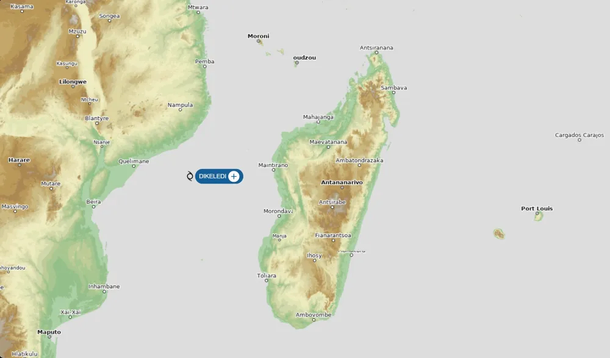
As of Tuesday afternoon, Dikeledi’s impact extended beyond Mozambique, with surrounding areas like Madagascar also in the storm’s path. The cyclone’s influence is expected to bring torrential rains and dangerous sea conditions to regions of Madagascar, including the southwestern coasts of Mahajanga province. Météo-France warns that these heavy rains and destructive winds could cause significant damage, including the risk of marine submersion along coastal areas.
On the heels of the storm, the United Nations Office for the Coordination of Humanitarian Affairs (OCHA) continues to track Dikeledi’s path and assess its effects across the region. In Madagascar, the government has reported three fatalities and over 350 people displaced. Additionally, more than 5,200 people have been directly affected, with nearly 1,300 homes flooded and five health centers damaged. OCHA and its partners have mobilized efforts to provide water, sanitation, and hygiene kits, as well as water treatment supplies, to the displaced and those in need.
The scale of destruction in northern Mozambique mirrors the devastation caused by Cyclone Chido, which hit the same region less than a month ago. OCHA has emphasized that the international community’s swift response is crucial to help Mozambique and Madagascar recover, especially considering the challenges posed by successive storms. Humanitarian agencies are working tirelessly to ensure that the most vulnerable are supported and that recovery efforts are swiftly initiated in the wake of these catastrophic events.
This recent cycle of severe weather underscores the vulnerability of communities in the region, where cyclones have become an increasing threat due to changing climate patterns. As aid continues to pour in from the international community, the resilience of these communities will be tested, but with the help of humanitarian organizations, hope remains that they can rebuild and recover from yet another brutal natural disaster.
