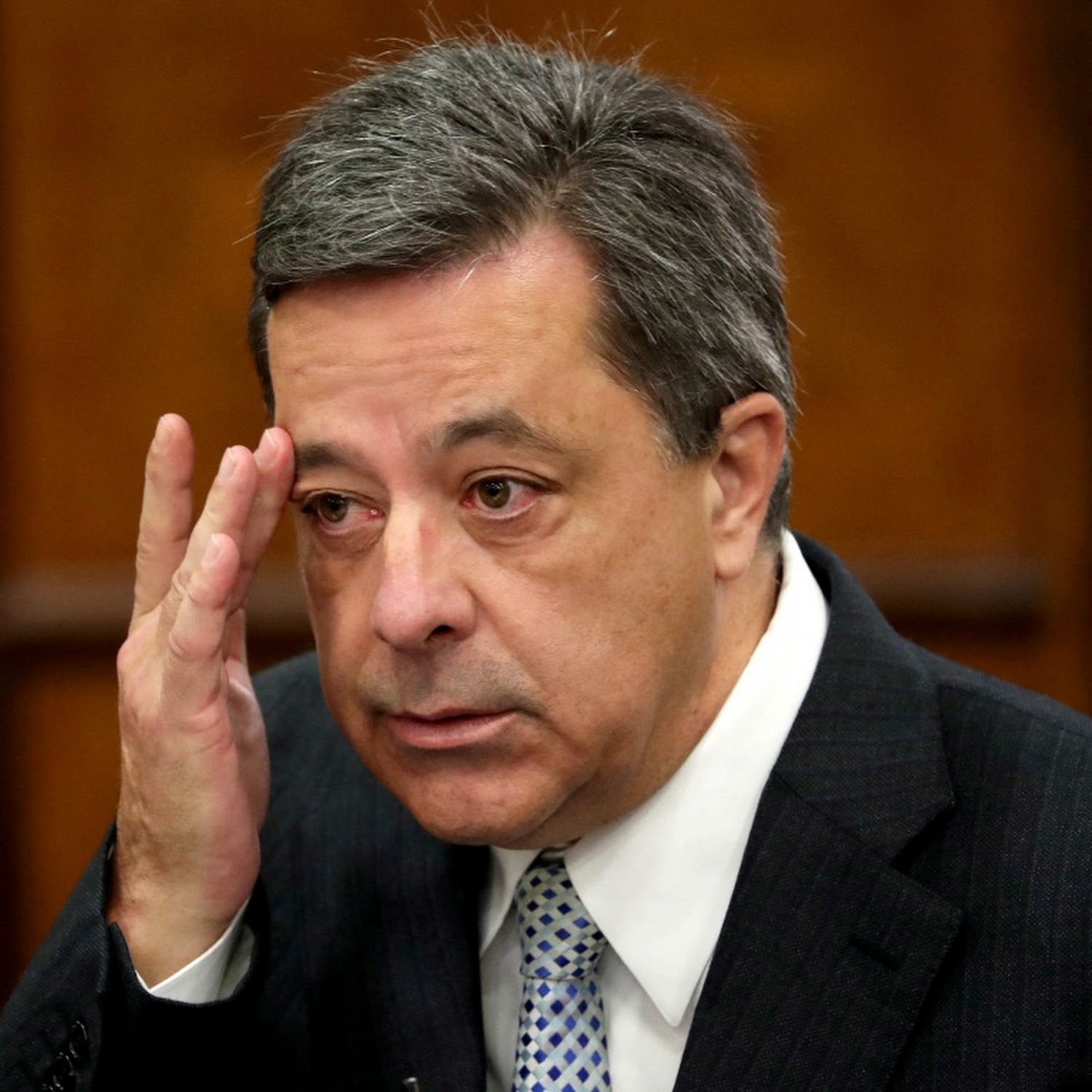
The silence surrounding the death of Markus Jooste, the former chief executive of Steinhoff, has sparked widespread curiosity and concern. Jooste’s passing, which was reported as a suicide in 2023, remains clouded by unanswered questions, particularly given the timing and the circumstances surrounding his final days. The day before his death, Jooste found himself at the center of a high-stakes battle with the Financial Sector Conduct Authority (FSCA). The FSCA had just slapped him with a staggering R475 million administrative fine, accusing him of accounting irregularities at Steinhoff, the retail giant that once seemed poised for global dominance.
Despite the intense media interest and the significant financial ramifications of his actions, the South African Police Service (SAPS) has been unusually tight-lipped about the investigation into his death. Inquiries have gone unanswered, and little to no information has been provided about the progress of the case or whether any new details have emerged. The Western Cape police, who are overseeing the investigation, have offered only minimal commentary, with Colonel Andre Traut stating last year that the inquest into Jooste’s death remains ongoing, but no further developments have been reported. This lack of transparency has left the public to speculate about what exactly transpired in the hours leading up to Jooste’s demise, including whether anyone witnessed the tragic event.
Jooste, once a respected business leader and the architect behind Steinhoff’s rise, is now remembered for the devastation his company’s collapse left in its wake. Steinhoff, a conglomerate that once boasted a market value of billions, became the symbol of corporate mismanagement and fraud in South Africa. Jooste’s aggressive expansion strategy, particularly his partnership with Christo Wiese, seemed to promise continued success. In 2014, the duo pushed for a rapid international expansion that saw Steinhoff’s stock skyrocket to unprecedented heights. But the company’s meteoric rise was soon followed by a dramatic fall.
The cracks in Steinhoff’s operations began to show in late 2017, following revelations of serious accounting discrepancies within its Central European division. What started as a disagreement with business partner Andreas Seifert eventually led to a cascade of regulatory inquiries, media investigations, and law enforcement scrutiny. Steinhoff’s inflated profits and hidden liabilities were uncovered, and the company’s financial statements, particularly for the year 2017, became the subject of intense scrutiny. At the heart of the controversy was Jooste’s resistance to appoint new auditors, despite requests from Deloitte LLP for an internal investigation. His resignation in December 2017, following the mounting pressure, signaled the beginning of the end for Steinhoff.
The fallout from Jooste’s resignation was swift and severe. His departure came just days before that of Christo Wiese, Steinhoff’s other key figure, after the Public Investment Corporation (PIC), one of South Africa’s largest institutional investors, demanded independent oversight. The once-vibrant company saw its value plummet by over R160 billion within a matter of days, triggering a crisis that ultimately led to Steinhoff’s near-total collapse. The aftershocks were felt not only by shareholders and investors but also by the South African public, with the PIC suffering a substantial loss, reportedly around R200 billion, on its investments.
Despite his resignation and the company’s dramatic implosion, Jooste’s reputation remained largely untarnished until the full scope of the scandal was revealed. For years, he had been celebrated as a business visionary, a leader with a keen eye for international expansion. Yet, as the truth came to light, it became clear that his legacy would be defined not by his early triumphs but by the enormous scale of the deception that had taken place under his watch.
Even with Steinhoff’s demise, questions about the company’s financial practices and Jooste’s role in its collapse persist. The lack of clarity surrounding his death only adds to the mystery, leaving many to wonder whether there is more to his tragic end than has been disclosed. In the face of such a high-profile case, the failure of the police to provide regular updates has raised concerns about the transparency of investigations into South Africa’s corporate elite.
Markus Jooste’s story is a reminder of the fine line between business success and failure, and the heavy toll that deceit and mismanagement can take on both individuals and institutions. As time passes, the details of his life and death may become clearer, but for now, the unanswered questions continue to linger, much like the scandal that consumed Steinhoff.
